
Introduction
HCU Hyderabad issues :-The University of Hyderabad (UoH), commonly known as Hyderabad Central University (HCU), is renowned not only for its academic excellence but also for its sprawling natural environment.
Located in the Gachibowli area of Hyderabad, Telangana, the campus spans approximately 2,300 acres, a significant portion of which is covered by pristine forest land.
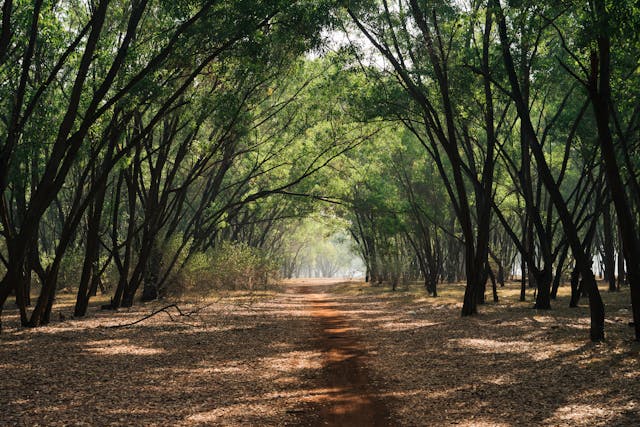
This green cover has long been cherished for its biodiversity, ecological significance, and aesthetic value. However, recent attempts by the Telangana government to clear around 400 acres of green cover near the university for developmental purposes have sparked outrage among environmentalists, university students, faculty, and the general public.
The dispute has led to legal interventions from the Telangana High Court and the Supreme Court of India.
Background of HCU Forest
• Biodiversity and Ecological Importance:-
The HCU campus is one of the largest green covers in the Hyderabad metropolitan area, providing a habitat for various flora and fauna.
According to the official website of the University of Hyderabad, the campus is home to diverse species such as spotted deer, hares, peacocks, porcupines, wild boars, and over 200 species of birds.
Additionally, various species of trees and shrubs contribute to the campus’s rich biodiversity.
Several studies have been conducted on the flora and fauna present in the HCU campus. For example, a study by Raghavendra et al. (2019) documented the avian diversity within the campus, identifying it as a critical habitat for migratory and resident birds.
Such studies underscore the importance of preserving the forest cover from deforestation or developmental activities.
Recent Developments
• Clearing Activities and Protests:-
The Telangana government began clearing 400 acres of forests in the vicinity of University of Hyderabad early in 2025.
The government decided to carry out the clearing operation because they planned to develop urban infrastructure in that area.
The proposed action received widespread opposition from diverse groups which feared that negative ecological consequences would result from performing these actions.
Students who attended University of Hyderabad together with staff members along with environmental activists staged demonstrations to challenge the clearing operations.
Awareness campaigns that appeared over various channels worked toward emphasizing biodiversity threats alongside the regional weather effects.
Reports by The Indian Express (2025) show that Telangana High Court acted by blocking the clearance operations pending investigation.
Environmental activists together with concerned citizens succeeded in obtaining court approvals from petitions that defended the ecological significance of the area.
Legal Interventions
Legal actions together with court orders formed additional obstacles which impeded the deforestation project.
When the Telangana High Court imposed a stoppage on deforestation activities environmentalists considered this outcome to be gloat-worthy.
A decision made by the High Court concerning the deforestation activities led the state government to submit an appeal to the Supreme Court of India.
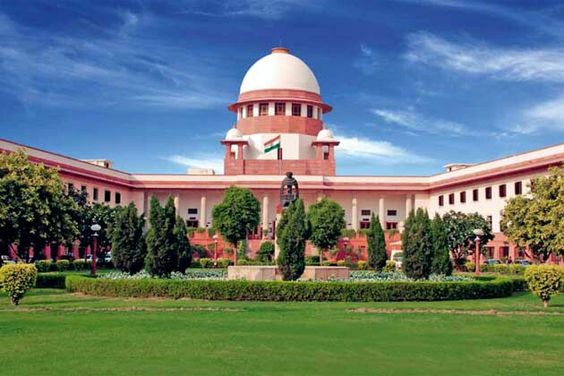
The Supreme Court supported the previous High Court ruling which confirmed the need for total site clearing activities in the region according to The Indian Express (2025).
The Supreme Court issued a directive for the High Court registrar to generate an extensive evaluation about how the proposed development would affect the natural environment.
The HCU forest divorce in court demonstrates the hard-to-solve challenges which exist between forest protection and urban construction concerns.
Infrastructure development stands essential for economic growth according to the state government but environmentalists maintain that such growth should not cause irreversible environmental harm.
Environmental and Ecological Impact
• Biodiversity Loss and Environmental Degradation
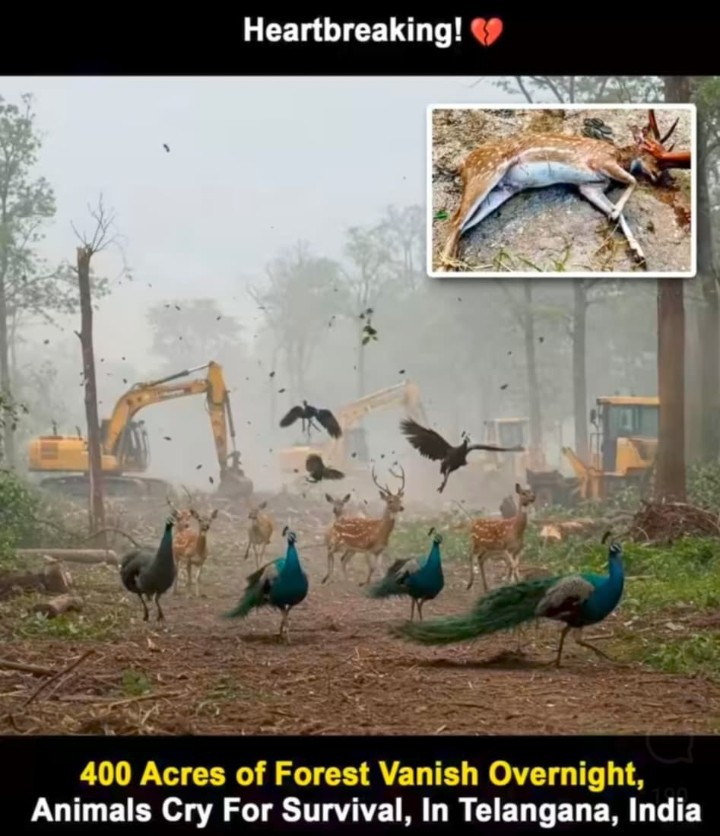
A dense forest area supports biodiversity as the main biodiversity hub in this rapidly developing landscape.
Any form of breakage or destruction in this forest area would threaten its native wildlife populations while interrupting the natural balance in the region.
Research by both environmental experts and scientists demonstrates that forests in urban regions function as crucial carbon-storing ecosystems while reducing heat island intensity and enhancing air purity.
Joshi et al. (2020) analyzed the HCU campus vegetation which effectively reduces climate temperature variations and enhances air quality in the area.
Green cover loss in this area has the potential to cause temperature increases and air pollution deterioration and negative impacts to regional biodiversity status.
Disruptions in bird migration will occur if deforestation happens since numerous species use forest cover to construct nests and search for food.
Endangered species together with vulnerable species face significant habitat destruction challenges because they inhabit the HCU campus area.
Public Protests and Awareness Campaigns
• Activism and Public Awareness
HCU Hyderabad issues now become a topic of national debate about urban green space conservation because it reaches beyond Telangana state boundaries.
The environmental movement uses social media platforms to both spread knowledge about their cause and engage supporters to become active members.
Activists who use Twitter hashtag campaigns including #SaveHCUForest and #SaveGreenCover have posted videos and photographs of areas damaged by the situation.
A number of distinguished environmentalists have expressed their worries about this matter.
Dr. Vandana Shiva as a prominent environmentalist tweeted that destroying our green spaces to gain short-term profits will surely result in disaster. Nonetheless we need to put ecological health before hasty urbanization development because it is the responsible option in the present circumstance.
Conclusion
• The Way Forward
The ongoing struggle to protect the HCU forest highlights the broader conflict between environmental conservation and urban development.
While economic growth and infrastructure expansion are important, they must be pursued in a manner that does not compromise the natural ecosystems that support life.
The legal interventions by the Telangana High Court and the Supreme Court provide a glimmer of hope for conservation efforts.
However, continued vigilance and advocacy will be essential to ensure that the HCU forest is preserved for future generations.
The outcome of this dispute will undoubtedly serve as a precedent for similar cases across India, where urban development often clashes with environmental conservation.
It is imperative that policymakers, environmentalists, and the general public work together to find sustainable solutions that protect both the environment and developmental interests.
References
• Raghavendra, R., et al. (2019). Avian Diversity in HCU Forest. Journal of Ecological Studies.
• Joshi, P., et al. (2020). Urban Forests as Carbon Sinks: A Case Study of HCU Campus. Environmental Science Review.
• The Indian Express. (2025). “Supreme Court Halts HCU Forest Clearance Activities.” [Online]. Available: https://indianexpress.com
• The News Minute. (2025). “Protests Erupt Over HCU Forest Clearance in Telangana.” [Online]. Available: https://thenewsminute.com
• University of Hyderabad. (2025). “Biodiversity at HCU Campus.” [Online]. Available: https://uohyd.ac.in